
Rocky's Rave
Shedding some light on Edgars Creek: Will the animals be happy?
The upcoming Landscape Improvement Plan for Edgars Creek includes an ample amount of new path lighting along the Edgars Creek trail, making an easier and safer travel for local walkers and cyclists.
Theoretically, with more people using the trail, there will be fewer cars on the road, meaning less pollution in the local area.
However, these new lights, although great for a nightly walk, threaten to disrupt the vital wildlife corridor along Edgars Creek.
Take our native nocturnal frogs. Iconic species like the endangered Growling Grass Frog have a unique feature: eyes so sensitive they can see colour in pitch darkness. They rely on natural darkness to navigate the creek, hunt for bugs, and call out for mates.
Like most nocturnal animals, a frog hopping into a beam of light will freeze on the spot, temporarily blinded by the glare. This creates a barrier along the water, meaning that populations can’t come together to breed. It also makes them easy targets for foxes and roaming domestic cats. In addition, their food source of insects is distracted by these lights, drawn away from the creek by the unnatural glow.
Other frogs, such as the Eastern Common Froglet, are tricked into thinking that it’s daytime and go back into hiding.
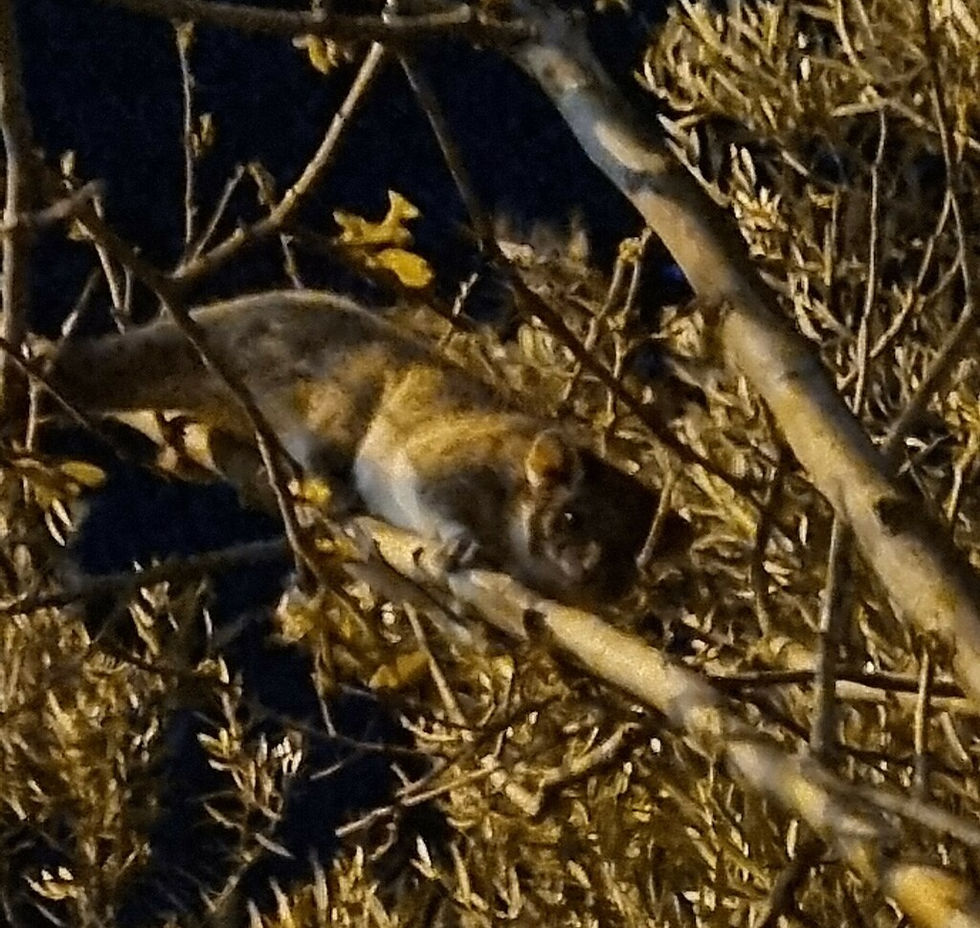
Up in the trees, Ringtail Possums avoid the light to stay safe, meaning a lit area of bush fragments their habitat. If they do pluck up the courage to travel through the light, they become an easier target for predators.
As a whole, artificial lights trap native species in isolated pockets and halts essential wildlife movement, affecting the whole ecosystem.
Hopefully, the project uses more environmentally friendly lighting choices so we can keep the path safe for locals while ensuring our creek's unique wildlife isn't left paying the price.
A Dirty Dilemma: Pollution along the creek
For decades the Edgars Creek was treated as little more than a conveniently placed drain. As the suburbs grew, the creek was straightened and in many sections, lined with concrete to carry water away as quickly as possible. The residential and industrial stormwater systems were then connected and rubbish soon followed.
The problem facing the creek is that it serves as the destination for everything dropped on the streets of its catchment. It’s not just people throwing things directly into the creek. Any rubbish that is dropped or spilt out of bins in the water catchment area will go down the stormwater drains and eventually end up in the Edgars.
Among the longest surviving contaminants are polystyrene balls. They come from construction sites & packaging and easily find their way into the system, where they are nearly impossible to recover. One day when I was helping with planting along the creek, we found polystyrene 15cm down through the soil. Often wildlife will swallow these tiny pieces of plastic, leading to a stomach full of plastic and toxic chemicals that works its way up the food chain.
Beyond the visible litter, the creek faces other pollutants. Runoff from drains carry heavy metals like arsenic, silver & mercury, as well as detergents from residential car washing & garden fertilisers washed off driveways. A stretch of creek in Coburg North in 2020 even turned bright pink! Nowadays the creek has a lot less animal life than it used to.
The general view of seeing Edgars Creek as a drain to seeing it as a living ecosystem is now being realised. Through the installation of pollutant traps, the future removal of the concrete lining and revegetation projects that filter runoff, there is a chance to reverse the damage. As long as our drains lead directly to the water, we need to be more careful as to where our waste ends up.

Hollow There! The Importance of Tree Hollows
What is a tree hollow?
Tree hollows are simply large holes that form inside trees. They are usually made when a branch falls or bark is damaged allowing fungi to break down the wood while the outer sapwood remains alive. Insects like termites and beetles dig into the weakened wood creating cavities. Sometimes the hollow can be made larger when wildlife such as cockatoos dig out the inside.
Hollows are important in the ecosystem as they provide homes and nesting spaces for wildlife like birds, bats, and possums. Unfortunately, hollows take 100-200 years to form and 400 years to be suitable for larger animals. So, when areas are cleared of these old-growth trees to build houses or farms it would take hundreds of years for them to come back.
Enter nest boxes! Nest boxes don’t take hundreds of years to form and can be installed at any height, size and depth you want. Different animals will want different shaped hollows and nest boxes can be custom built for certain species. If you want to attract native wildlife in your own backyard and don’t have a tree with hollows, nest boxes are the way to go! Who knows what animals might move in?
